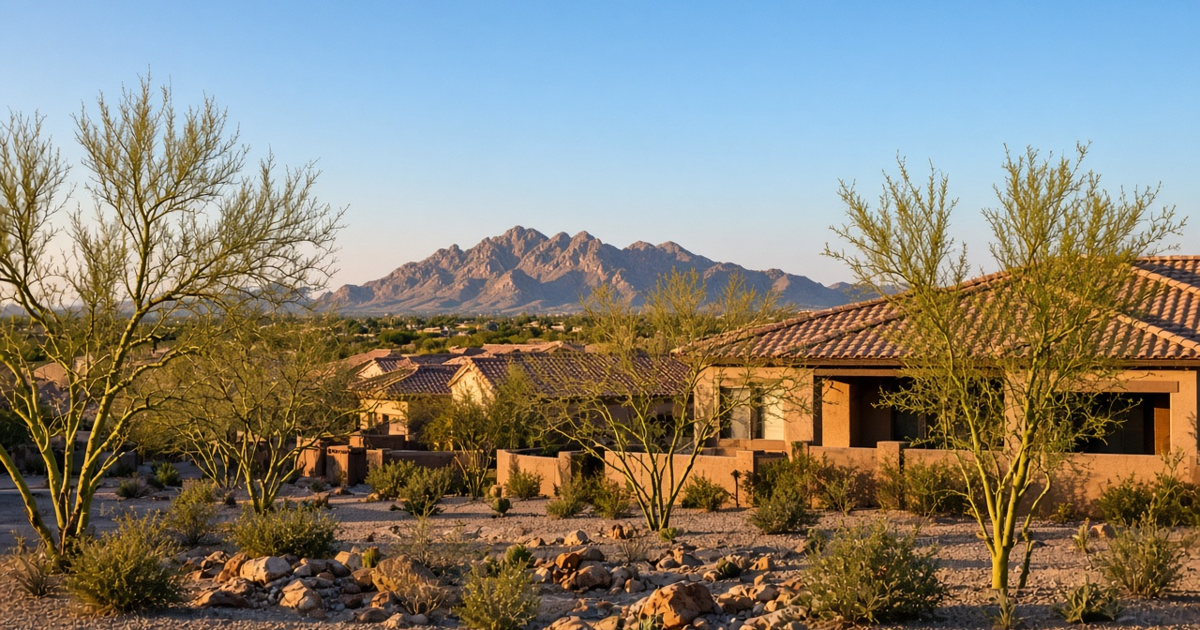
October in Phoenix is the month the Valley finally exhales. The triple-digit days are behind us, the monsoon season has officially wrapped up, and for the first time in months, spending a Saturday afternoon outside working on your home actually sounds appealing. For homeowners — and especially for anyone thinking about listing in the next few months — that makes fall the single best window of the year to take stock of what summer did to your property.
Here is the Phoenix fall home maintenance checklist worth working through this month.
Why Phoenix Fall Home Maintenance Matters More Than You Think
Phoenix summers are hard on houses. Months of extreme heat bake roofing materials, strain air conditioning systems, fade paint and stucco, and push irrigation systems to their limits. Then the monsoon arrives — the National Weather Service defines the season as June 15 through September 30 — bringing wind, dust, sudden downpours, and the kind of debris that finds its way into every roof valley, gutter, and pool filter in the Valley.
Most of that wear is invisible until it becomes a problem. A cracked roof tile or a small gap in the stucco does not announce itself in October — it announces itself as a leak during a winter storm, or as a line item on a buyer’s inspection report. Catching it now, while the weather is cooperative and contractors are coming off their busiest season, is both easier and less expensive.
Start at the Top: Your Post-Monsoon Roof and Exterior Inspection
Roof tiles, underlayment, and flat-roof coatings
Much of the Valley’s housing stock is topped with concrete or clay tile, which is durable — but the tiles are only part of the system. Underneath sits the underlayment that does the real waterproofing work, and years of desert heat can wear it down long before the tiles show their age. After monsoon winds, look for slipped, cracked, or missing tiles, and have a roofer check for debris collecting in the valleys. For homes with flat or low-slope roofs, common in many established Phoenix, Tempe, and Scottsdale neighborhoods, inspect the coating for blistering, cracking, and spots where water pooled after storms.
Stucco, paint, and window seals
Walk the exterior and look for hairline cracks in the stucco, peeling paint on the west- and south-facing walls that took the brunt of the summer sun, and dried-out caulking around windows and doors. These are small, inexpensive fixes in the fall. Left alone, they let in dust, pests, and moisture — and they are exactly the kind of details buyers notice on a first walk-through.
Drainage and grading
Not every Phoenix home has gutters, but every home needs water moving away from its foundation. Clear any gutters and downspouts of storm debris, and make sure the soil and gravel around the house still slope away from the slab. Heavy runoff can quietly reshape grading in a single season.
Switch Your HVAC From Survival Mode to Maintenance Mode
Your air conditioner has likely worked harder over the past five months than at any other time of the year. October is the right time for a professional tune-up — after the heaviest cooling load, before the system sits mostly idle for the winter, and well before next summer, when HVAC companies are booked solid. Replace filters (monsoon dust clogs them faster than usual), have the condenser coils cleaned, and ask the technician to check the heating side of your heat pump or furnace before the first cool desert nights arrive.
For sellers, a recent service record is a genuine selling point. Buyers in the desert understand what an air conditioning replacement involves, and documentation showing the system has been maintained answers one of the first questions they will ask.
Reset the Yard for the Valley’s Best Outdoor Season
Dial back irrigation timers
The watering schedule that kept your landscape alive in July is far too aggressive for October. As temperatures drop, cut back watering frequency on your drip and sprinkler systems. Overwatering in the fall wastes water, raises your bill, and can stress desert-adapted plants. While you are at it, walk the system and look for broken emitters or sprinkler heads that took a hit during summer storms.
Overseeding a winter lawn
If you keep a bermudagrass lawn green through the winter, the timing is now. The University of Arizona Cooperative Extension places the Phoenix-area window for seeding winter ryegrass at roughly October 10 through November 10, ideally when daytime temperatures are in the 80s and nighttime lows are around 55 degrees. Seeding too early lets the bermuda outcompete the new grass before it can establish.
Trim, clean up, and plant
Fall is prime planting season in the low desert, and a good time to clear storm-damaged branches, trim trees back from the roofline, and refresh decomposed granite or mulch. For sellers, a tidy, healthy yard is curb appeal that photographs well — and the soft light of a Phoenix fall and winter is about as good as listing photography gets.
Don’t Forget the Pool and the Pests
Monsoon storms are notoriously hard on pools. Dust, leaves, and runoff can throw water chemistry off and clog filters, so a thorough filter cleaning and a chemistry check are worth doing now. Many owners also shorten pump run times as the water cools — ask your pool professional what makes sense for your equipment.
Cooler weather also sends pests looking for shelter, including scorpions and rodents. Seal gaps around doors and utility penetrations, replace worn weatherstripping, and consider scheduling a fall pest treatment. It is a small step that prevents an unwelcome surprise — and an unwelcome note on an inspection report.
Your Quick Phoenix Fall Checklist
· Inspect the roof for slipped or cracked tiles and check flat-roof coatings
· Patch stucco cracks, touch up sun-damaged paint, and re-caulk windows and doors
· Clear storm debris and confirm drainage slopes away from the foundation
· Schedule an HVAC tune-up and replace filters
· Reduce irrigation run times and repair damaged emitters
· Overseed bermudagrass between mid-October and mid-November, if you keep a winter lawn
· Clean the pool filter and rebalance water chemistry
· Seal entry points and schedule fall pest control
What This Means for Homeowners and Sellers This Fall
For homeowners staying put, a weekend or two of fall maintenance protects what is, for most families, their largest financial asset. The problems a Phoenix summer creates are almost always less expensive to fix in October than they are in February — or in the middle of next July.
For sellers planning to list during the fall and winter months, when mild weather and seasonal and relocating buyers bring steady activity to the Valley, this checklist doubles as pre-listing preparation. Buyers and their inspectors will look closely at the roof, the HVAC system, the pool, and the yard. Addressing those items before you list means fewer surprises during escrow, a stronger negotiating position, and a home that shows the way it should. A local agent can help you decide which projects are worth tackling before listing and which are better handled through pricing — and can connect you with trusted roofers, HVAC technicians, and inspectors. Reach out today to talk through your fall plan and find out what your home could sell for this season.